Proudly Serving Indianapolis, Fort Wayne
and Surrounding Areas
Emergency service appointments available
For Indianapolis Call: (317) 922-1271
For Fort Wayne Call: 260-999-4114
Categories
Stinging Insects

Why Yellowjacket Problems Often Get Worse in Fort Wayne During Late Summer

Many Fort Wayne homeowners notice that yellowjackets become far more of a problem in August and September than they were earlier in the year. The change is predictable and tied to the way yellowjacket colonies grow over the season. By late summer, a colony that started small in spring has reached its largest size, and the wasps behave in ways that bring them into contact with people. Our stinging insect control in Fort Wayne handles a steady rise in yellowjacket calls during these weeks.

Colonies Reach Peak Size Late in the Season

A yellowjacket colony begins with a single queen in spring and adds workers throughout the summer. By August, a single nest can contain thousands of wasps. More wasps means more activity around the nest and a greater chance of an encounter.

A colony that has grown all summer also needs a large amount of food, and that demand is part of what pushes the wasps toward homes and gathering places. This steady growth is the main reason the problem feels sudden, even though it is the result of months of colony building.

Food Sources Shift Toward Human Food

Earlier in the year, yellowjackets feed largely on insects and protein to raise their young. As the season moves into late summer, the colony’s needs change and natural food becomes harder to find. The wasps turn to sugary and protein-rich human food instead, which is why they appear around trash cans, recycling bins, outdoor meals, and sweet drinks. This shift puts them directly in the path of backyard gatherings.

Why Yellowjackets Are So Difficult

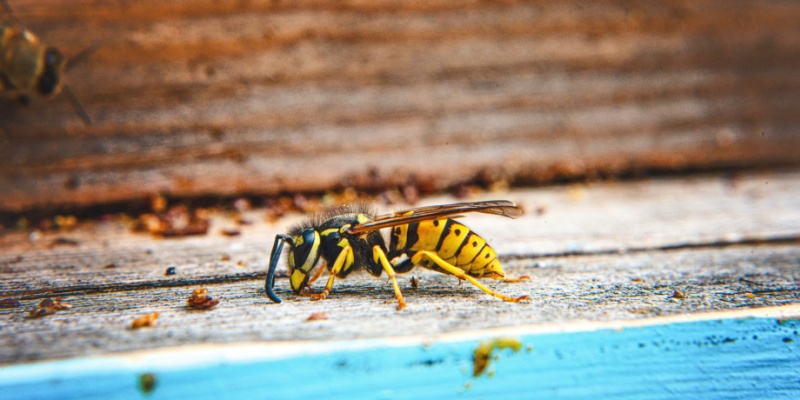
Yellowjackets are among the most aggressive stinging insects in our area. Unlike honeybees, a single yellowjacket can sting repeatedly, and a disturbed nest can send many workers out at once. They commonly nest underground, in wall voids, and in other hidden spaces, which makes their nests hard to find until activity is heavy. Stepping near a ground nest or striking a wall void can trigger a defensive response from the whole colony.

When a yellowjacket stings, it can also release a chemical signal that prompts other workers to join in, which is one reason a single disturbance can result in several stings.

Common Late-Summer Nesting Spots in Fort Wayne

We find yellowjacket nests in a number of recurring locations around Fort Wayne homes:

  • Underground burrows in lawns and along garden beds
  • Wall voids and gaps in exterior siding
  • Spaces beneath sheds, decks, and porches
  • Crawl spaces and attic corners

Because these nests are concealed, homeowners often discover them only after being stung.

Why Professional Treatment Matters Now

Spraying a visible entrance rarely reaches a full underground or hidden nest, and an incomplete treatment can make the wasps more defensive. Our technicians locate the nest, treat the colony at its source, and confirm the wasps are gone. Every service is supported by our 90-day guarantee. For a closer look at the stinging insects active here, see our guide on how to identify wasps, yellowjackets, and hornets.

Do not wait for a late-summer nest to grow more dangerous. Request a free quote and let our Fort Wayne team address the problem safely.
Categories
Stinging Insects

Why Paper Wasps Love Building Nests Under Fort Wayne Decks and Eaves

Paper wasps are one of the most common stinging insects we treat for Fort Wayne homeowners, and the underside of a deck or the edge of a roofline is exactly where they prefer to build. These wasps look for sheltered, protected spots to start a nest, and the structures around a typical home offer plenty of options. Our stinging insect control in Fort Wayne often begins with a nest tucked into one of these areas. Understanding what draws paper wasps to decks and eaves can help you spot a problem early.

What a Paper Wasp Nest Looks Like

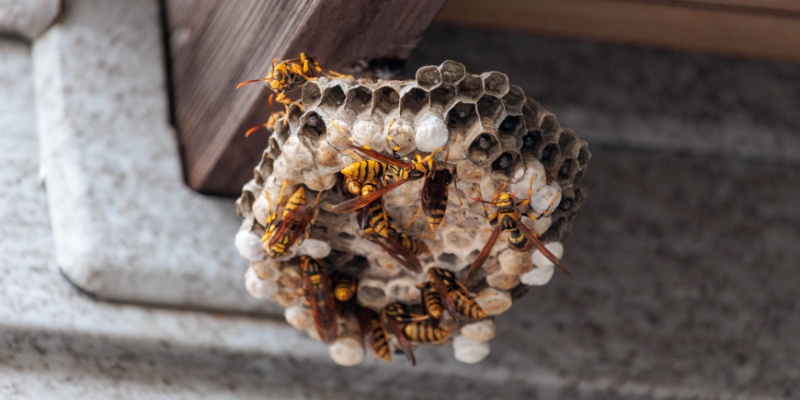
Paper wasps build open, umbrella-shaped nests that hang from a single stalk. The cells are visible from below, which sets these nests apart from the enclosed nests built by hornets and yellowjackets. A nest usually starts small in late spring, when a queen begins building, and grows through the summer as workers are added. Most paper wasp colonies stay relatively small, with populations that range from roughly a dozen to a couple hundred wasps.

Why Decks and Eaves Are Ideal

Paper wasps prefer locations that are covered overhead and shielded from wind and rain. Several features of a Fort Wayne home meet those needs:

  • The underside of deck railings and floor boards
  • Eaves, soffits, and roof overhangs
  • Porch ceilings and the tops of door frames
  • Gutters and the gaps behind fascia boards
  • Outdoor light fixtures and the corners of window frames

These spots stay dry, hold warmth, and sit out of reach of most predators, which makes them attractive places to raise a colony.

Why Fort Wayne Homes See So Many

Fort Wayne’s warm, humid summers support strong insect populations, and paper wasps feed their young on caterpillars and other soft-bodied insects that are plentiful here. A property with gardens, mature trees, and nearby food sources gives wasps a steady supply, and the many decks and covered porches common to homes in the area provide the shelter they need.

The Risk of a Nest Close to the Home

Paper wasps are not as aggressive as yellowjackets, but they will sting to defend their nest. A nest under a deck rail or beside a frequently used door puts people close to the colony, and an accidental bump or vibration can provoke a defensive response. For anyone allergic to stings, that risk is serious. Removing a nest without the right approach often scatters the colony and leads to stings.

How We Handle Paper Wasp Nests

Our technicians locate the nest, identify the species, and treat the colony directly rather than only spraying the wasps in flight. We then remove the nest and point out the spots on the home most likely to attract a new one. Each visit is backed by our 90-day guarantee, and we offer eco-friendly product options for households that prefer them.

If paper wasps have settled under your deck or eaves, we can take care of it. Contact our Fort Wayne team to schedule a stinging insect inspection for your home.

Categories
Mosquitoes

Best Mosquito Exterminators in Fort Wayne, IN

Choosing a mosquito exterminator in Fort Wayne can feel difficult when several companies advertise similar services. The right provider should do more than spray a yard once and leave. Effective mosquito control depends on local knowledge, the correct treatment methods, and a consistent schedule that lasts through the season.

At Trio Pest Control, we provide mosquito control in Fort Wayne built around the specific conditions that make mosquitoes such a persistent problem in this part of Indiana.

What to Look for in a Mosquito Exterminator

Pest control companies do not all approach mosquitoes the same way, and the differences affect how well a treatment holds up. When comparing providers in the Fort Wayne area, several qualities are worth weighing:

  • Local experience matters, because a company familiar with Northeast Indiana understands how the region’s rivers, ponds, and humid summers drive mosquito activity.
  • Ongoing service is more valuable than a single spray, since mosquito populations rebuild quickly after one treatment.
  • Technicians should be trained and licensed, because correct product handling and application require both.
  • A service guarantee shows the company is willing to stand behind its results.
  • Safe product options give households with children and pets added peace of mind.

A provider that meets these standards is far more likely to deliver lasting relief than one offering a quick, one-time spray.

How Trio Pest Control Approaches Mosquito Season

We are a family-owned and operated company that has served the Indianapolis area for more than two decades, and we now bring the same service to Fort Wayne. Our technicians complete 90 days of classroom and on-the-job training under a licensed manager before they ever respond to a call.

During each visit, we inspect for breeding and resting sites, treat the areas mosquitoes use most, and adjust our approach to the specific property. We provide monthly mosquito treatments from May through September, which keeps protection in place during the months when mosquitoes are most active in our area.

Service Backed by a Guarantee

All of our work is supported by a 90-day guarantee. If mosquitoes remain a problem between scheduled visits, we will return and address it at no additional charge.

We also offer eco-friendly product options for customers who prefer them, along with same-day and emergency appointments for situations that cannot wait. Our goal is steady, reliable control that allows you to use your yard throughout the summer.

A Good Fit for Fort Wayne Pet Owners

Many of our Fort Wayne customers have pets, and they want treatments that suit a household with animals. We discuss product options before we begin so you always know what is being applied and why. You can read more about this in our article on the best pest control company in Fort Wayne for pet owners.

Schedule Mosquito Service in Fort Wayne

The right local team makes the difference between a yard you avoid and one you can enjoy all season. Request your free quote and let our Fort Wayne technicians build a mosquito plan suited to your property.

Categories
Mosquitoes

Why DIY Mosquito Treatments Often Fail During Peak Mosquito Season in Northeast Indiana

By the middle of summer, mosquito numbers in Northeast Indiana reach their highest point of the year. This is also when many homeowners discover that the sprays, foggers, and repellents they bought are no longer keeping up. Store-bought products can reduce mosquitoes for a short time, but they rarely control the problem once the season peaks. Professional mosquito control in Fort Wayne is built to handle these conditions, and understanding why do-it-yourself methods fall short can save a great deal of time and frustration.

Most Products Only Kill Adults on Contact

Aerosol sprays, foggers, and citronella products affect the mosquitoes that are present at the moment of use. They do nothing to the eggs and larvae developing in standing water nearby. Because a new generation of mosquitoes can mature in roughly a week during warm weather, the population replaces itself faster than contact products can reduce it. A yard can look clear in the evening and be full of mosquitoes again within a few days.

Treatments Miss the Places Mosquitoes Rest

During the day, mosquitoes rest in cool, shaded, humid spots such as under decks, inside dense shrubs, along fence lines, and in tall grass. Hose-end yard sprays often fail to reach these areas, and most homeowners do not know to target them. When resting sites go untreated, mosquitoes return as soon as the product dries. Reaching these areas effectively takes the right equipment and an understanding of where mosquitoes spend their day.

Rain and Humidity Wash Products Away

Northeast Indiana summers bring regular rainfall and consistently high humidity. Many over-the-counter treatments break down quickly once they are rained on or struck by sprinklers. Without professional-grade products and proper application, protection can disappear within a day or two, which means a homeowner is back to spraying again and again with little lasting result.

Standing Water Is Easy to Overlook

Clearing standing water is one of the more useful steps a homeowner can take, yet mosquitoes breed in places that are simple to miss, including clogged gutters, plant saucers, tarps, and low spots in the lawn. Even a careful cleanup does not stop mosquitoes that travel in from a neighbor’s yard, a drainage ditch, or a nearby pond. Northeast Indiana has no shortage of these water sources, so removing every breeding site by hand is rarely possible.

The Hidden Cost of Repeated DIY Efforts

Homeowners often spend a full season buying one product after another, treating the yard on weekends, and still spending their evenings indoors. The money and time add up, and the results are usually temporary. Each treatment fades, the population rebounds, and the cycle starts over. During peak season, when mosquitoes are breeding at their fastest, this approach struggles to make a lasting difference no matter how much effort goes into it.

What Professional Treatment Does Differently

Our technicians treat the resting areas where adult mosquitoes hide and address the standing water where they breed. We use professional-grade products and equipment designed to last between visits, and we return monthly from May through September so coverage stays consistent through the busiest part of the season. Every service is supported by our 90-day guarantee, and we are happy to discuss eco-friendly options for homes with children and pets.

Peak mosquito season does not have to keep you inside. Contact our Fort Wayne team to set up professional mosquito service for your property.