
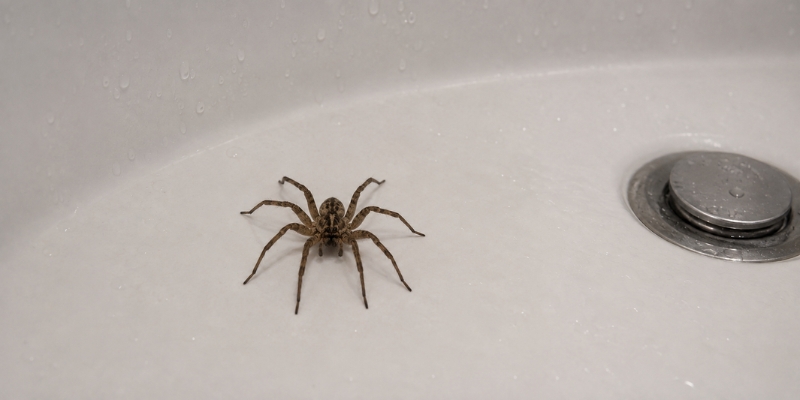
A spider in your bathtub usually reached it from the wall, ceiling, fixture area, or another part of the room and then became trapped on the smooth surface. A covered drain blocks one possible opening, but the drain is rarely the route that best explains the sighting. If bathroom spiders are part of a repeated indoor pattern, Trio Pest Control’s Fort Wayne spider-control service can help locate where they are traveling and why they remain active.
The Tub Acts Like a Pitfall Trap
Many spiders can cross painted walls, textured flooring, and trim because those surfaces provide enough grip for their feet. Porcelain, fiberglass, and acrylic tubs are much smoother. A roaming spider that slips from the wall or tub edge may be unable to climb back out.
That trapping effect makes the bathtub the place where you discover the spider, even though it started somewhere else. The spider may have crossed the bathroom overnight, dropped from a towel or shower curtain, or followed an edge near the plumbing access. You see the end of its route rather than the entry point.
Sinks create the same effect. A spider found in a basin can look as though it emerged from the drain, but smooth vertical sides explain why it remained visible until morning. The drain cover may be working exactly as intended while gaps elsewhere remain open.
Bathrooms Contain Other Travel Routes
Plumbing must pass through walls, floors, and cabinets. Openings around supply lines and drain pipes can connect the room to a wall void, crawl space, basement, or utility chase. Exhaust-fan housings, baseboard gaps, loose trim, and door undercuts provide additional routes. A spider can also enter through an open window or damaged screen.
Inspect accessible areas with a flashlight. Look around pipe penetrations beneath the sink, the toilet supply line, baseboards, the vanity toe kick, and trim around the tub. Appropriate gaps can be sealed with materials suited to the location. Avoid obstructing drainage, ventilation, or access that plumbing and electrical systems require.
An exterior wall can add another path. Gaps around siding, windows, vents, and utility penetrations may admit insects or spiders before they move through connected voids. The best correction may sit several feet from the bathtub.
Humidity Supports Insects That Spiders Hunt
The spider may be responding to prey rather than the room itself. Drain flies, fungus gnats, small flies, silverfish, and other moisture-associated pests can occur near leaks, organic buildup, damp towels, or poorly ventilated spaces. A spider that finds regular prey along a bathroom edge has a reason to stay nearby.
Run the exhaust fan during and after bathing, allow wet surfaces and textiles to dry, and repair dripping fixtures. Clean areas where organic film accumulates according to the fixture’s care instructions. If small flies are present, identify their breeding source; spraying the adults misses the material producing them.
Humidity alone does not prove the spider lives in the bathroom. It may have wandered from a basement, attic, or wall void. Repeated sightings in the same room justify looking for both prey and connected travel routes.
What the Type of Spider Can Tell You
Cellar spiders often occupy upper corners and make irregular webs. A spider can fall from that web or drop while disturbed. House spiders may use concealed edges around fixtures. Wolf spiders hunt on foot and can roam into a bathroom before becoming trapped. None of those behaviors requires travel through a water-filled plumbing trap.
Brown recluse concerns require careful identification. These spiders are less common in northern Indiana than farther south, and many ordinary house spiders are brown. A violin-like marking is not enough by itself because other species have dark shapes on the front of the body. An intact specimen or a clear close photograph provides better evidence.
Avoid handling an unknown spider with bare hands. If you can do so safely, place a container over it, slide stiff paper beneath the rim, and seal the container. Otherwise, use a vacuum and empty it outside. Medical concerns following a suspected bite belong with a qualified healthcare professional.
When One Tub Sighting Becomes a Pattern
One spider may be an accidental wanderer. Record repeated sightings by room and date. Check nearby rooms, the level below the bathroom, and accessible utility areas for webs or activity. Monitors placed safely along wall edges may reveal whether spiders approach from the doorway, vanity, or plumbing wall.
Several sightings, spiders of different sizes, egg sacs, or activity across multiple bathrooms can indicate a broader indoor issue. A professional inspection can trace connected voids, evaluate basement or crawl-space conditions, identify insect prey, and recommend targeted service. That approach uses the bathtub sighting as a clue instead of treating the drain as the entire problem.
A More Useful Fix Than Covering Another Opening
Keep the drain cover if it serves your household, but focus the spider response on likely routes and supporting conditions. Seal appropriate penetrations, repair screens, reduce humidity, remove webs and egg sacs, and address small-insect activity. Keep towels and clothing off the floor so spiders have fewer concealed contact points.
When spiders keep appearing in your tub or elsewhere indoors, contact Trio Pest Control for an inspection that follows the evidence beyond the drain.