
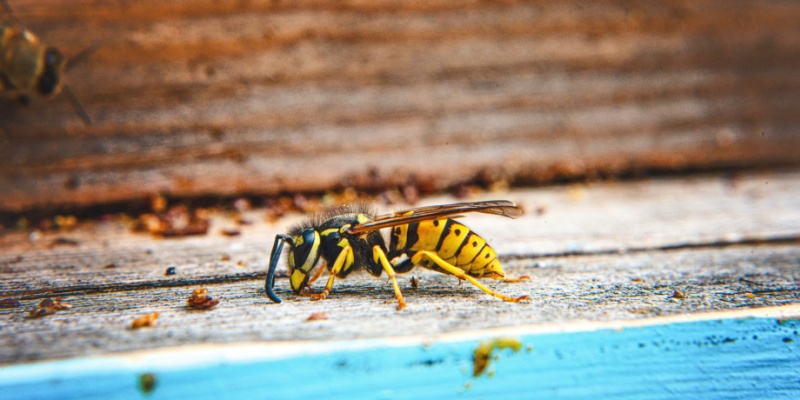
Many Fort Wayne homeowners notice that yellowjackets become far more of a problem in August and September than they were earlier in the year. The change is predictable and tied to the way yellowjacket colonies grow over the season. By late summer, a colony that started small in spring has reached its largest size, and the wasps behave in ways that bring them into contact with people. Our stinging insect control in Fort Wayne handles a steady rise in yellowjacket calls during these weeks.
Colonies Reach Peak Size Late in the Season
A yellowjacket colony begins with a single queen in spring and adds workers throughout the summer. By August, a single nest can contain thousands of wasps. More wasps means more activity around the nest and a greater chance of an encounter.
A colony that has grown all summer also needs a large amount of food, and that demand is part of what pushes the wasps toward homes and gathering places. This steady growth is the main reason the problem feels sudden, even though it is the result of months of colony building.
Food Sources Shift Toward Human Food
Earlier in the year, yellowjackets feed largely on insects and protein to raise their young. As the season moves into late summer, the colony's needs change and natural food becomes harder to find. The wasps turn to sugary and protein-rich human food instead, which is why they appear around trash cans, recycling bins, outdoor meals, and sweet drinks. This shift puts them directly in the path of backyard gatherings.
Why Yellowjackets Are So Difficult
Yellowjackets are among the most aggressive stinging insects in our area. Unlike honeybees, a single yellowjacket can sting repeatedly, and a disturbed nest can send many workers out at once. They commonly nest underground, in wall voids, and in other hidden spaces, which makes their nests hard to find until activity is heavy. Stepping near a ground nest or striking a wall void can trigger a defensive response from the whole colony.
When a yellowjacket stings, it can also release a chemical signal that prompts other workers to join in, which is one reason a single disturbance can result in several stings.
Common Late-Summer Nesting Spots in Fort Wayne
We find yellowjacket nests in a number of recurring locations around Fort Wayne homes:
- Underground burrows in lawns and along garden beds
- Wall voids and gaps in exterior siding
- Spaces beneath sheds, decks, and porches
- Crawl spaces and attic corners
Because these nests are concealed, homeowners often discover them only after being stung.
Why Professional Treatment Matters Now
Spraying a visible entrance rarely reaches a full underground or hidden nest, and an incomplete treatment can make the wasps more defensive. Our technicians locate the nest, treat the colony at its source, and confirm the wasps are gone. Every service is supported by our 90-day guarantee. For a closer look at the stinging insects active here, see our guide on how to identify wasps, yellowjackets, and hornets.
Do not wait for a late-summer nest to grow more dangerous. Request a free quote and let our Fort Wayne team address the problem safely.