
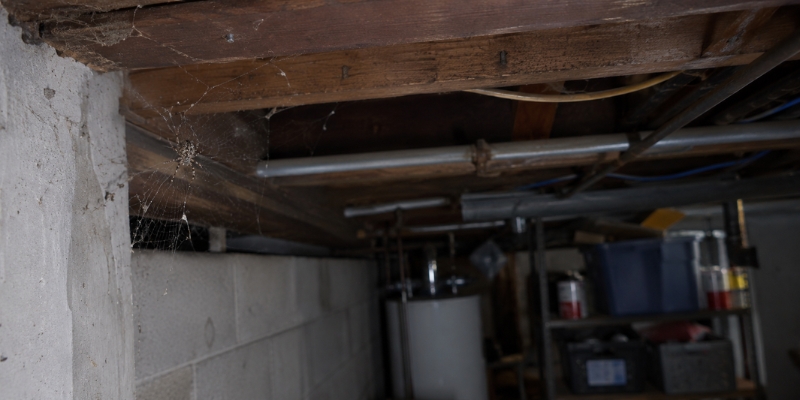
Fort Wayne basements attract spiders when they provide insect prey, stable shelter, accessible gaps, and enough moisture for small pests to thrive. Dim corners, exposed joists, utility penetrations, stored belongings, and low traffic can support both web builders and wandering hunters. Professional spider control for Fort Wayne homes can identify the species present and trace the conditions making your basement useful to them.
The Basement Is Connected to the Outdoors
The lowest level of a house contains many transitions between soil, foundation, utilities, and indoor space. Gaps around pipes and cables, cracks at joints, loose basement-window frames, uncovered sump openings, and worn seals can admit spiders or the insects they follow. A spider may also move down from a wall void or arrive in a box stored after time in a garage or shed.
Basements often stay cooler and more stable than upper floors. That stability creates protected resting sites during hot weather and cold snaps. Unfinished ceilings, rim joists, sill plates, floor drains, and spaces behind insulation provide edges where spiders can retreat without much disturbance.
Moisture Supports the Food Supply
Spiders eat other small animals, especially insects. A damp basement may support fungus gnats, drain flies, springtails, silverfish, sowbugs, centipedes, and other organisms associated with moisture or organic debris. Spiders follow that food rather than seeking dampness for the same reasons as those prey species.
Condensation on pipes, foundation seepage, a leaking utility sink, an open sump, or persistently high humidity can keep part of the basement favorable. Cardboard stored on a floor may absorb moisture and create additional shelter for insects. Even a small damp zone behind appliances or shelving can sustain activity that is easy to miss during normal cleaning.
A dehumidifier may help when humidity is the issue, but it cannot repair a leak or correct exterior drainage. Downspouts, grading, gutters, plumbing, and foundation conditions may all need attention. Match the correction to the source instead of treating every moisture problem as an indoor-air problem.
Quiet Storage Creates Hiding Places
Basements often collect items that remain untouched for months. Boxes, folded fabric, paper bags, seasonal decorations, and furniture create narrow protected spaces. Web-building spiders can anchor silk behind stored items, while hunting spiders can rest in seams and gaps during daylight.
Organization makes the area easier to inspect. Place belongings in secure plastic containers when practical, keep containers off the floor, and leave a small inspection path along foundation walls. Vacuum accessible webs, corners, and egg sacs. Empty the vacuum outside after collecting live spiders or sacs.
Regular movement makes a hiding place less dependable. A clean-looking basement can still support spiders when storage conceals the edges that cleaning tools never reach. Reducing dense, long-term clutter exposes those locations and makes monitoring more informative.
Lighting and Windows Can Create Local Hot Spots
Basement windows and walkout doors can concentrate insects. Light from a finished basement draws small insects toward glass after dark, and damaged screens allow some to enter. Window wells collect leaves and moisture, creating habitat immediately beside the frame. Webs around one window often point to a local prey source rather than a basement-wide infestation.
Clean window wells, check covers where appropriate, repair screens, and inspect seals. Remove organic debris and address standing water. If webs continue to form in that one area, a monitoring trap placed safely along the wall may show whether spiders are entering there or traveling from another part of the basement.
Reading the Evidence in Your Basement
Web location and shape can help separate types of activity. Cellar spiders often hang in loose, irregular webs in corners or beneath joists. Funnel weavers build sheetlike webs leading to a retreat. Wolf spiders hunt on foot and are likely to be seen moving along floors. Brown recluse spiders create small retreats instead of conspicuous capture webs and become less common as you travel north through Indiana, so a brown basement spider should be identified using several features beyond color.
Repeated sightings provide stronger evidence than one isolated spider. Note the room, date, and time, and save a clear photo from a safe distance. Glue-board monitoring along wall edges can reveal travel patterns, but place traps where children and pets cannot reach them. An intact specimen is particularly useful when identification affects the control plan.
How a Professional Inspection Uses Those Clues
A technician can inspect likely entry routes, moisture zones, storage edges, and insect activity. Species identification helps determine whether the spiders are temporary invaders, established indoor residents, or predators following a separate pest problem. Treatment can then focus on active harborages and travel routes while recommendations address exclusion, storage, and moisture.
The strongest plan combines immediate reduction with environmental changes. Removing spiders without correcting a window gap or prey source leaves an open opportunity. Correcting humidity without inspecting wall voids may miss an established source. The property’s evidence determines the balance.
If basement sightings are frequent or you are unsure which spider is present, contact Trio Pest Control to arrange a Fort Wayne inspection and get a plan based on your basement’s actual conditions.