
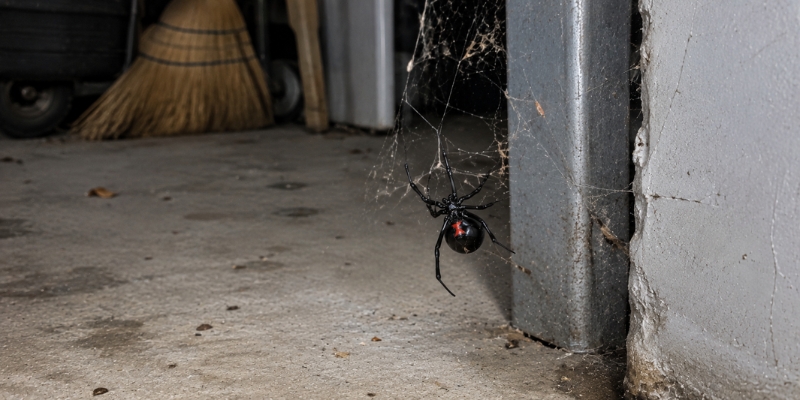
Spiders in a Fort Wayne garage may be entering from outside, living and reproducing inside, or doing both. A single spider near an open overhead door often wandered in, while repeated sightings of similar spiders, egg sacs, and webs in protected corners suggest the garage is supporting ongoing activity. Trio Pest Control provides spider control in Fort Wayne for garages where the source is difficult to pin down.
Signs of Outdoor Entry
Garages are unusually open parts of a home. The overhead door creates a wide entry whenever it is raised, and small gaps remain if the bottom seal, side seals, or frame no longer fit properly. Service doors, windows, vents, and penetrations for wiring or utilities add more routes. Items carried in from a shed, yard, or delivery can transport a spider as well.
Evidence that points toward occasional outdoor entry includes:
- Sightings clustered beside the overhead door or an exterior service door
- Activity that rises after the door stays open for yard work
- Outdoor web-building species appearing without indoor webs or egg sacs
- Spiders found shortly after firewood, plants, boxes, or equipment are brought inside
Season adds context. Mature spiders roam frequently in late summer, and changing temperatures alter where insects and spiders find shelter. One wanderer after a weather change supplies limited information about the rest of the garage.
Signs the Garage Is Supporting Spiders
A garage can function like a large sheltered outbuilding. It stays drier than the yard, contains quiet ceiling and wall edges, and often holds undisturbed storage. Exterior lights and small gaps admit insects. The space may therefore provide food, retreats, and egg-laying sites throughout the season.
Recurring webs in the same corners, spiders of different sizes, shed skins, egg sacs, and repeated trap catches away from doors point toward resident activity. Similar spiders appearing over several weeks carry more weight than several different outdoor species found after the door has been open.
Attached garages also connect to wall voids, attics, utility chases, and the living area. Weatherstripping on the door between the garage and house helps with pest exclusion as well as the door’s intended separation function. Any repair should preserve fire-safety requirements and proper operation.
Stored Items Blur the Line Between Outside and Inside
Cardboard boxes, gardening supplies, sports gear, tarps, and seasonal decorations create protected folds and voids. A spider can arrive inside an item and then remain because the garage offers suitable conditions. Storage can also conceal webbing and egg sacs, making a small population difficult to see.
Move items carefully, wear gloves, and avoid placing hands into unseen spaces. Replace damaged cardboard with lidded plastic containers when practical. Keep storage elevated and leave room to inspect walls and floor edges. Vacuum visible spiders, webs, and egg sacs, then dispose of the contents outside.
Firewood deserves special handling. Store it away from the home and bring in only the amount needed for immediate use. Wood piles shelter many insects and spiders, and keeping them beside an attached garage increases traffic near openings.
Prey Can Keep the Garage Occupied
Spiders need food. Flies around trash, beetles drawn to lights, pantry pests in birdseed, and insects associated with damp cardboard can all support them. Pet food, grass seed, and birdseed should be kept in secure containers. Clean spills, manage trash, and address leaking faucets or condensation.
Review exterior lighting near the garage door. A bright fixture directly above the opening brings flying insects to the same place where spiders have strong web anchors. Adjusting the fixture, bulb, or operating schedule may reduce that concentration while preserving needed visibility and security.
Monitoring Helps Separate the Two Sources
Place glue-board monitors along wall edges and behind storage where they remain inaccessible to children and pets. Date each trap and record catches by location. Activity concentrated beside the overhead door suggests an entry route. Catches deep in the garage, especially among storage or near interior wall connections, can point to established harborages.
Identification adds context. Large circular webs generally belong to outdoor web builders. Wolf spiders are active hunters and may roam in through a door. Brown recluse spiders use hidden retreats and are less common in northern Indiana than in the southern half of the state; any suspected specimen should be identified carefully rather than labeled by its brown color.
Closing the Route and Reducing the Habitat
Inspect the overhead-door seal in daylight from inside the closed garage. Light showing at the corners or under the seal may reveal a repair need. Check service-door sweeps, window screens, and appropriate utility gaps. Keep drainage and ventilation openings functional, and use materials suitable for each building joint.
The interior needs equal attention when resident activity is present. Reduce clutter, remove webs and egg sacs, correct moisture, protect stored foods, and address other insects. Professional service can combine inspection, identification, targeted treatment, and practical exclusion recommendations.
If you keep finding spiders throughout the garage and cannot tell whether they are visitors or residents, schedule an evaluation with Trio Pest Control so the response can target the source.