Proudly Serving Indianapolis, Fort Wayne
and Surrounding Areas
Emergency service appointments available
For Indianapolis Call: (317) 922-1271
For Fort Wayne Call: 260-999-4114

If you are finding droppings in your cabinets, hearing movement inside the walls at night, or discovering chew marks on food packaging, rodents have likely set up residence in your Anderson home. Mice and rats are destructive, unsanitary, and fast to reproduce. The longer they go untreated, the harder and more expensive the problem becomes to resolve. Trio Pest Control provides targeted rodent removal in Anderson to eliminate the infestation and help prevent future entry.
"*" indicates required fields
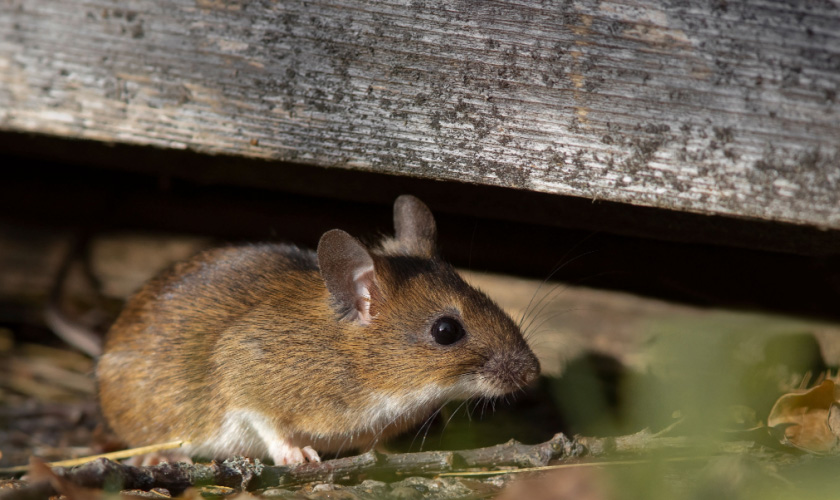
Rodents are not a pest you can wait out. Mice and rats are driven by survival, and once your Anderson home gives them what they need, they are not going to leave voluntarily. They nest in walls, attics, basements, and crawl spaces, and they reproduce at a rate that can turn a minor issue into a serious infestation in a short period of time. By the time most homeowners realize they have a rodent problem, the population is already established and actively causing damage.
At Trio Pest Control, we approach rodent control in Anderson with a clear strategy. Our technicians inspect the property to identify how rodents are getting in, where they are nesting, and how far the activity has spread. We then combine trapping, treatment, and exclusion methods to eliminate the existing population and close the doors they have been using to get inside. The result is a plan that addresses both the immediate problem and the long-term risk.
Homes provide exactly what rodents are looking for: warmth, protection from predators, and a consistent supply of food and water. Anderson homes with attached garages, crawl spaces, older foundations, or mature landscaping near the structure are especially susceptible. Mice and rats gravitate toward properties that offer easy access to the interior, and they are remarkably good at finding it.
Common attractants include accessible garbage, pet food left in bowls or bags, birdseed, garden produce, and food waste in compost bins. Even grease residue on a grill or fallen fruit in the yard can draw rodents closer to the home. Once they are on the property, it does not take long for them to discover a crack, gap, or opening that leads inside.
Once rodents gain entry, they move quickly to establish nesting sites and feeding routes. They chew through insulation to create nests, shred paper and fabric for bedding, and mark their travel paths with urine and body oils. Their gnawing extends to almost any material they encounter, including electrical wires, plumbing components, drywall, cabinetry, and stored personal items.
The health implications are significant. Rodent droppings and urine accumulate in areas where food is stored and prepared, creating contamination risks for your family. Diseases including hantavirus, salmonellosis, and rat-bite fever are all associated with rodent infestations. Droppings can also become airborne when disturbed, introducing allergens and pathogens into your indoor air. The combination of property damage and health risk makes rodent infestations one of the most urgent pest problems a homeowner can face.
Rodents are secretive by nature, but they leave evidence of their presence in predictable ways. Small dark droppings are often the first thing homeowners notice, typically found inside drawers, under sinks, along baseboards, and near food sources. Gnaw marks on packaging, wood, or plastic are another clear indicator.
Rub marks are a less obvious but equally telling sign. As rodents travel the same paths repeatedly, the oils on their fur leave dark smudges along walls, pipes, and floor edges. You may also find shredded insulation, paper, or fabric gathered in hidden corners or behind appliances. Noises are common as well. Scratching, tapping, or light thumping sounds in walls or above the ceiling, especially at night, point to active movement. A persistent stale or ammonia-like odor in a confined area often indicates a nest nearby.
Solving a rodent problem requires more than placing a trap in the corner. At Trio Pest Control, we take a structured approach that addresses the full scope of the infestation. After a thorough inspection, we deploy a combination of methods selected for the species, the level of activity, and the areas of the home that are affected. Trapping targets the active population, while exclusion work focuses on closing the openings that rodents are using to get in and out.
We also provide practical guidance on reducing the conditions that make your home appealing to rodents in the first place. Changes like securing food storage, sealing exterior gaps, and managing outdoor attractants can make a real difference in keeping rodents from returning. Our team works with Anderson homeowners to develop a plan that delivers results now and helps maintain a rodent-free home going forward.
At Trio Pest Control, we focus on the environment around us here in the Anderson area. We are professionals at controlling bugs, insects, carpenter ants, spiders, rodents, and other pests indigenous to Indiana, things like the following:

Trio’s year-round protection! 12 annual treatments year-round. Common Pests: ants, flies, small flies (Gnats), stink bugs, centipedes, millipedes, sow bugs, spiders, silverfish, food infesting insects, moths-indian, meal moth, grain beetle.
Learn More
Trio’s year-round protection! 4 annual treatments year-round. Common Pests: ants, flies, small flies (Gnats), stink bugs, centipedes, millipedes, sow bugs, spiders, silverfish, food infesting insects, moths-indian, meal moth, grain beetle.
Learn More
Trio’s year-round protection! 1 annual treatment year-round. Common Pests: ants, flies, small flies (Gnats), stink bugs, centipedes, millipedes, sow bugs, spiders, silverfish, food infesting insects, moths- indian, meal moth, grain beetle.
Learn MoreFor help choosing the right package, call today: 260-999-4114
Mice can fit through openings as small as a dime, and many of their entry points are in areas that are difficult to see. Common hidden access routes include gaps around utility lines where they enter the home, spaces beneath garage door seals, cracks in the foundation that are hidden behind landscaping, and damaged vent screens on the roof or crawl space. A professional inspection can uncover entry points that are easy to miss during a visual check.
Yes. Where there is one mouse, there are almost always more. Mice rarely travel alone, and a single sighting usually means a small population is already present. Because they reproduce rapidly, what seems like a minor situation can escalate within weeks. Addressing it early is always easier and less costly than waiting.
Yes. Rodents can transmit leptospirosis, which affects both dogs and humans, as well as other illnesses through contaminated food, water, and surfaces. Rodent droppings and urine in areas where pet food is stored or where pets spend time can put your animals at risk. Keeping rodent populations under control helps protect every member of the household.
Rodent control can and should happen whenever activity is detected, regardless of the season. However, fall is a particularly critical time because dropping temperatures drive mice and rats to seek shelter inside homes. Scheduling an inspection in the early fall can help identify and seal entry points before the seasonal migration indoors begins.
Absolutely. Rats and mice are excellent climbers and can access the attic through gaps around the roofline, damaged soffit material, uncapped plumbing vents, and tree branches that hang close to the house. Attics provide warmth, insulation for nesting, and minimal human disturbance, making them an ideal habitat for rodents.
The timeline depends on the size of the infestation and the species involved. Smaller mouse problems can often be resolved within a week or two. Larger infestations involving rats, or situations where rodents have multiple entry points and nesting sites, may require several weeks of trapping, monitoring, and exclusion work. Your Trio Pest Control technician will provide a realistic timeline after the initial inspection.
Do not handle it with bare hands. Wear gloves, place the rodent in a sealed plastic bag, and dispose of it in an outdoor trash container. Clean the area where it was found with a disinfectant, and avoid sweeping or vacuuming droppings dry, as this can release airborne particles. If you are finding dead rodents frequently, it may indicate an active infestation that needs professional evaluation.