Proudly Serving Indianapolis, Fort Wayne
and Surrounding Areas
Emergency service appointments available
For Indianapolis Call: (317) 922-1271
For Fort Wayne Call: 260-999-4114

Whether it is a web stretched across the corner of your living room or a wolf spider sprinting across the basement floor, spiders are one of the most common pest complaints for Indiana homeowners. Most species are not dangerous, but that does not make them any easier to live with. If spiders are showing up regularly in your Anderson home, there is likely an insect problem feeding the activity. Trio Pest Control offers comprehensive spider control in Anderson that targets both the spiders and the pests attracting them.
"*" indicates required fields
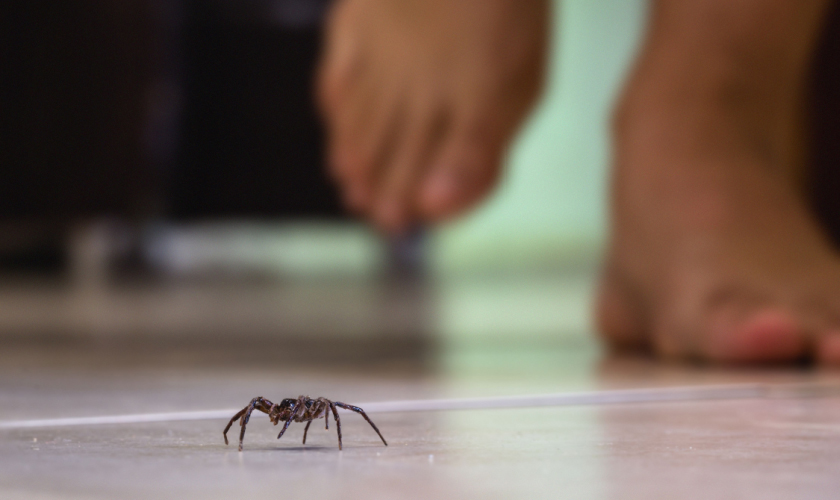
Spiders can be unnerving to encounter inside your home, even when the species is completely harmless. For Anderson homeowners who are seeing spiders on a regular basis, whether in corners, along ceilings, inside closets, or in the garage, the issue is often less about the spiders and more about the insects that are drawing them in. Spiders are opportunistic predators that set up wherever prey is available, and a home with active insect populations is exactly the kind of environment they are looking for.
Trio Pest Control provides spider treatment in Anderson that addresses the full picture. We treat for spiders directly, reduce the insect activity that supports them, and help identify the conditions that are allowing both into your home. This combined approach delivers better, longer-lasting results than removing individual spiders ever could.
Every home encounters the occasional spider, but frequent sightings usually point to one or more contributing factors. The most common is an existing insect population inside the home. Ants, flies, gnats, earwigs, and other small insects are all food sources for spiders. The more insects present in your home, the more spiders you are likely to see.
Access is another key factor. Spiders enter through the same kinds of openings as other pests: gaps under doors, cracks in the foundation, loose window screens, spaces around utility lines, and openings in soffits or eave areas. Homes with mature landscaping, mulch beds close to the foundation, or woodpiles stacked against exterior walls are more likely to see spiders migrating indoors from the surrounding property.
Clutter also plays a role. Storage areas filled with boxes, old furniture, and seldom-moved items create ideal harborage for spiders. The less an area is disturbed, the more comfortable spiders become using it as a long-term habitat.
Several spider species are encountered regularly in and around Anderson homes. Common house spiders are the most frequent, building messy webs in room corners, behind furniture, and near windows. Cellar spiders prefer damp, dark environments and are most often seen in basements, crawl spaces, and utility rooms. Wolf spiders are ground dwellers that do not spin webs. They are fast, large relative to other common species, and tend to startle homeowners when they appear unexpectedly on the floor.
Jumping spiders are small and active during the day. They are typically found near windows and exterior doors and are not considered a threat. The brown recluse, however, is a species that should be taken seriously. Found in closets, attics, crawl spaces, inside boxes, and behind wall hangings, the brown recluse can deliver a bite that causes significant tissue damage. They are not aggressive but will bite when accidentally pressed against skin, such as when putting on a shoe or reaching into a storage box they have been hiding in.
Treating spiders without addressing the insect population in your home is a short-term fix at best. Spiders will continue moving into a home as long as there is prey available to sustain them. This is why a spider problem is often better understood as an overall pest problem. The spiders are just the most visible part of it.
At Trio Pest Control, our approach accounts for this connection. When we treat for spiders in Anderson, we are simultaneously treating for the insects that are keeping them well fed. By reducing the food source, we take away the primary reason spiders are choosing your home as their habitat. This makes the results of treatment more effective and longer lasting than targeting spiders alone.
Our spider treatment in Anderson starts with a thorough assessment of your home, both inside and out. We identify the species present, note areas of heavy web activity, check for egg sacs, and evaluate the level of insect activity that may be contributing to the problem. Treatment is applied to key harborage areas, entry points, baseboards, corners, and along the exterior perimeter of the home.
For properties with brown recluse concerns, we take additional steps, including placing monitoring traps in high-risk areas and applying targeted treatments in closets, storage rooms, and other low-traffic spaces where recluse spiders are most commonly found. We also advise homeowners on practical changes, such as reducing clutter and adjusting outdoor lighting, that can make the home less inviting for both spiders and their prey.
At Trio Pest Control, we focus on the environment around us here in the Anderson area. We are professionals at controlling bugs, insects, carpenter ants, spiders, rodents, and other pests indigenous to Indiana, things like the following:

Trio’s year-round protection! 12 annual treatments year-round. Common Pests: ants, flies, small flies (Gnats), stink bugs, centipedes, millipedes, sow bugs, spiders, silverfish, food infesting insects, moths-indian, meal moth, grain beetle.
Learn More
Trio’s year-round protection! 4 annual treatments year-round. Common Pests: ants, flies, small flies (Gnats), stink bugs, centipedes, millipedes, sow bugs, spiders, silverfish, food infesting insects, moths-indian, meal moth, grain beetle.
Learn More
Trio’s year-round protection! 1 annual treatment year-round. Common Pests: ants, flies, small flies (Gnats), stink bugs, centipedes, millipedes, sow bugs, spiders, silverfish, food infesting insects, moths- indian, meal moth, grain beetle.
Learn MoreFor help choosing the right package, call today: 260-999-4114
Not every brown spider is a brown recluse. The brown recluse is identified by its uniform light brown color, a violin-shaped marking on the area behind its head, and six eyes arranged in three pairs rather than the typical eight eyes most spiders have. If you are uncertain, avoid touching the spider and contact a pest control professional to inspect the area and identify the species.
Spiders do not form colonies or infest in the traditional sense. They are solitary and spread out based on prey availability. However, a home with an active insect population can support a surprisingly large number of spiders across different rooms and areas. In that sense, spider activity can feel like an infestation even though the cause is the underlying insect problem.
Spider bites inside the home are relatively uncommon. Most spiders avoid contact with people and only bite when they are accidentally trapped against the skin, such as inside clothing, shoes, or bedding. Brown recluse bites, while rare, are the most medically significant spider bites reported in Indiana and typically happen in exactly these scenarios.
Removing webs can help reduce the visible signs of spider activity and may discourage some species from staying in a particular area. However, web removal alone does not address the root cause. Spiders will simply rebuild or relocate within the home as long as prey is available. Combining web removal with professional treatment and insect reduction produces the best results.
Spider activity indoors tends to increase in late summer and fall. Many species are reaching maturity during this time and are more mobile, and some are driven indoors by cooling temperatures. Male spiders of certain species become more active and visible in the fall as they search for mates. Spring can also bring an uptick in activity as egg sacs that were laid indoors begin to hatch.
Garages are popular spider habitats because they are often cluttered, dimly lit, and less frequently disturbed. Reducing stored cardboard boxes, clearing cobwebs regularly, sealing gaps around the garage door and windows, and reducing insect-attracting lights can all help. Professional treatment applied to the garage interior and exterior provides an additional layer of control.
We approach brown recluse situations with extra attention. In addition to standard spider and insect treatment, we place sticky monitoring traps in areas where recluse spiders are most likely to travel, including closets, storage areas, and behind furniture. We apply targeted treatments in cracks, crevices, and low-traffic zones where these spiders tend to hide. We also provide homeowners with tips for reducing harborage, such as keeping clothing off the floor and shaking out shoes before wearing them.