Proudly Serving Indianapolis, Fort Wayne
and Surrounding Areas
Emergency service appointments available
For Indianapolis Call: (317) 922-1271
For Fort Wayne Call: 260-999-4114
Termites work silently and out of sight, which is what makes them one of the most damaging pests a homeowner can face. They can feed on the structural wood in your home for months or even years before the signs become visible. By that point, the repair costs can be significant. If you have noticed mud tubes on your foundation, hollow-sounding wood, or swarmers near your windows, it is time to act. Trio Pest Control provides professional termite control in Muncie to detect, treat, and help prevent termite damage.
"*" indicates required fields
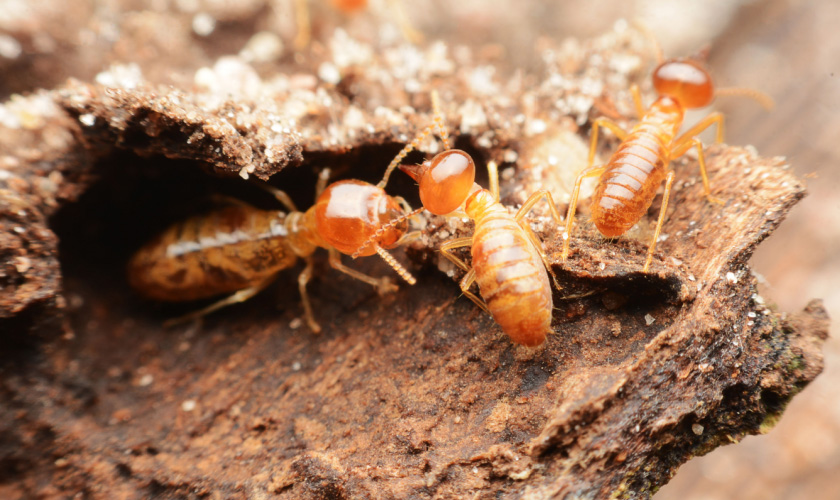
Termites are not a pest you can afford to take a wait-and-see approach with. A mature subterranean termite colony can consume wood around the clock without producing any outward sign that something is wrong. The damage happens from the inside, leaving exterior surfaces intact while structural components are being hollowed out underneath. For Muncie homeowners, the risk is real, and the cost of delayed action can be steep.
At Trio Pest Control, our termite control services in Muncie are built around thorough inspection, accurate identification, and treatment methods that target the colony at its source. Whether you are dealing with a confirmed infestation or have spotted early warning signs, our team can assess the situation and put a treatment plan in place to protect your home.
Subterranean termites are the most common termite species in Indiana and the most destructive. They live in large underground colonies that can contain hundreds of thousands of individuals. Worker termites leave the colony through the soil and travel upward to reach wood above ground. To protect themselves from exposure to open air, they construct mud tubes along foundation walls, piers, and other vertical surfaces. These tubes maintain the moisture they need to survive and serve as a direct pathway between the colony and their food source.
Inside the home, termites consume the cellulose found in wood framing, floor joists, support beams, and other structural materials. They feed from the inside out, which means the exterior of a board or beam can appear completely normal while the interior has been largely consumed. This silent, hidden pattern of damage is what makes termites so difficult to detect and so costly when they go unnoticed.
Termite infestations are rarely obvious in the early stages, but there are warning signs that should not be ignored. Mud tubes running along your foundation walls, interior walls, or support piers are one of the strongest indicators of subterranean termite activity. These pencil-width tubes may be found in basements, crawl spaces, or along exterior surfaces where the foundation meets the soil.
Other signs include wood that sounds hollow when tapped, floors that feel soft or spongy in certain areas, doors and windows that no longer open or close properly, and paint that appears bubbled or uneven on walls or trim. In the spring, you may notice winged termites, known as swarmers, emerging indoors near windows, light fixtures, or exterior entry points. Finding discarded wings on windowsills or floors is a reliable clue that a colony is nearby or already active inside the structure.
Termite damage is one of the most expensive home repairs a property owner can face, and it is almost never covered by standard homeowner insurance. Structural repairs to joists, framing, subflooring, and support beams can easily reach into the thousands, and the cost increases the longer the colony is allowed to feed. Many homeowners do not discover the damage until they are remodeling, selling the property, or dealing with a visible failure such as a sagging floor or crumbling trim.
In areas like central Indiana where subterranean termites are widespread, proactive inspections and early treatment are the most cost-effective form of protection. Catching an infestation in its early stages can save thousands of dollars compared to addressing advanced damage after years of undetected feeding.
At Trio Pest Control, we treat termite infestations in Muncie using methods designed to eliminate the active colony and establish a protective barrier around the home. Our technicians inspect the property to determine where termites are entering, how far the activity has progressed, and which treatment approach will deliver the strongest protection based on the home's construction and layout.
Treatment is applied to the areas where termites are most likely to access the structure, including along the foundation, at key structural contact points, and through any identified pathways. Our goal is to stop the current damage and create long-term conditions that discourage future termite activity. Regular monitoring and follow-up inspections can help ensure the treatment continues to perform over time.
At Trio Pest Control, we focus on the environment around us here in the Muncie area. We are professionals at controlling bugs, insects, carpenter ants, spiders, rodents, and other pests indigenous to Indiana, things like the following:

Trio’s year-round protection! 12 annual treatments year-round. Common Pests: ants, flies, small flies (Gnats), stink bugs, centipedes, millipedes, sow bugs, spiders, silverfish, food infesting insects, moths-indian, meal moth, grain beetle.
Learn More
Trio’s year-round protection! 4 annual treatments year-round. Common Pests: ants, flies, small flies (Gnats), stink bugs, centipedes, millipedes, sow bugs, spiders, silverfish, food infesting insects, moths-indian, meal moth, grain beetle.
Learn More
Trio’s year-round protection! 1 annual treatment year-round. Common Pests: ants, flies, small flies (Gnats), stink bugs, centipedes, millipedes, sow bugs, spiders, silverfish, food infesting insects, moths- indian, meal moth, grain beetle.
Learn MoreFor help choosing the right package, call today: 260-999-4114
Concrete foundations are not termite-proof. Subterranean termites can enter through expansion joints, hairline cracks, gaps where pipes and wires pass through the slab, and spaces around the foundation perimeter. Even a very small crack is enough for termites to find their way through and access the wood above.
Termites are active year-round underground. However, they are most visible to homeowners during the spring when reproductive termites, known as swarmers, emerge to start new colonies. Swarms typically happen on warm days following rain and are one of the most recognizable signs that a colony is nearby. Below the surface, worker termites continue feeding regardless of the season.
Termite swarmers and flying ants are commonly confused. Termites have straight antennae, a broad waist, and two pairs of wings that are equal in length. Flying ants have elbowed antennae, a pinched waist, and hind wings that are shorter than the front pair. If you are seeing winged insects indoors, especially near windows or light sources in the spring, it is worth having them identified by a professional.
Over-the-counter termite products are available, but they are generally not effective for treating an established infestation. Subterranean termite colonies are located underground and access homes through concealed pathways that consumer products cannot adequately reach. Professional treatment is designed to target the colony at its source and provide lasting protection around the structure.
An annual termite inspection is a good practice for any homeowner in central Indiana. Because termites can be active inside a home for years without producing obvious signs, regular inspections help catch problems early when treatment is less disruptive and far less expensive than repairing advanced structural damage.
Pressure-treated wood is more resistant to termites than untreated wood, but it is not immune. Over time, the preservatives in treated lumber can break down, especially at cut ends and in areas exposed to consistent moisture. Termites have been known to feed on pressure-treated wood when other food sources are limited or when the treatment has degraded.
The duration of protection depends on the treatment method and the conditions around the home. Liquid barrier treatments can remain effective for several years when properly applied. Your Trio Pest Control technician will explain the expected lifespan of the treatment and recommend a monitoring or retreatment schedule to maintain protection over time.