Proudly Serving Indianapolis, Fort Wayne
and Surrounding Areas
Emergency service appointments available
For Indianapolis Call: (317) 922-1271
For Fort Wayne Call: 260-999-4114

Spiders are a fact of life in Indiana, but that does not mean you have to share your living space with them. Webs appearing in every corner, spiders running across the floor, and egg sacs tucked behind furniture can make your home feel anything but comfortable. In many cases, a growing spider population is a sign that other insects are already present and providing a steady food source. Trio Pest Control provides professional spider control in Muncie to reduce activity inside your home and address the conditions bringing them in.
"*" indicates required fields
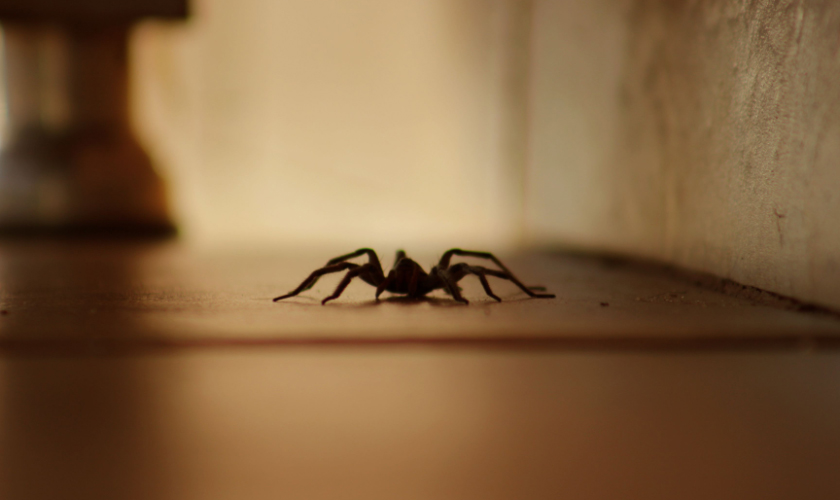
A spider here and there is expected in most homes, but when sightings become frequent or webs seem to appear faster than you can clear them, the situation has moved beyond normal. For many Muncie homeowners, increased spider activity is not just about the spiders themselves. It is often a signal that the home has a healthy population of insects that spiders are feeding on. That means the most effective spider control involves more than just removing the spiders you can see.
At Trio Pest Control, we take a comprehensive approach to spider control in Muncie. We treat the areas where spiders are most active, address the insect populations that are sustaining them, and focus on entry points and harborage zones both inside and outside the home. The result is a noticeable reduction in spider activity and the pest pressure that is driving it.
Spiders are predators, and they go where the prey is. If your home has populations of ants, gnats, flies, moths, or other small insects, spiders will be drawn in to take advantage of the food supply. They also enter homes to escape harsh weather conditions, including extreme heat, heavy rain, and the cold temperatures that come with an Indiana winter.
Entry points for spiders are similar to those for most household pests. Gaps beneath exterior doors, cracks around window frames, torn screens, openings around utility penetrations, and spaces along the foundation all provide easy access. Once inside, spiders settle in areas where they are least likely to be disturbed, including closets, basements, attic spaces, garage corners, and the areas behind and beneath furniture.
Most of the spiders found in Muncie homes are harmless to people. Common house spiders build tangled webs in corners and near windows. Cellar spiders, sometimes called daddy longlegs, are frequently found in basements, crawl spaces, and damp areas. Wolf spiders are larger and fast-moving, which tends to alarm homeowners, but they are not medically significant. Jumping spiders are small, active during the day, and are often spotted on walls, windowsills, and near doorways.
The species that does warrant concern is the brown recluse. Brown recluse spiders prefer undisturbed, low-traffic areas such as closets, storage boxes, behind picture frames, and in shoes or clothing that has not been worn recently. Their bite can cause localized tissue damage that may require medical treatment. While bites are uncommon, the presence of brown recluse spiders in a home is reason enough to seek professional evaluation.
Spiders do not typically infest a home the way ants or cockroaches do. They are solitary and spread out based on the availability of prey. However, when spider sightings become frequent, it almost always means the home has an underlying insect issue. The spiders are a symptom of a larger pest population that is providing them with a consistent food source.
This is why effective spider control addresses more than just the spiders. At Trio Pest Control, our treatment targets both the spiders and the insects that are supporting them. Reducing the food source is one of the most impactful steps in bringing spider activity down to a manageable level. Without that step, new spiders will continue to move in to replace the ones that are removed.
Our spider control process in Muncie begins with an inspection to assess the level of activity and identify the species present, including any brown recluse concerns. We treat the interior and exterior of the home with products applied to harborage areas, entry points, and along the foundation perimeter. For interiors, we focus on the corners, baseboards, closets, and storage areas where spiders are most commonly found.
Web removal, egg sac elimination, and treatment of insect prey populations are all part of the process. We also provide recommendations for reducing the conditions that attract spiders, such as adjusting exterior lighting, sealing access points, and decluttering storage areas. For homes with confirmed brown recluse activity, we may recommend monitoring traps and a more targeted treatment schedule.
At Trio Pest Control, we focus on the environment around us here in the Muncie area. We are professionals at controlling bugs, insects, carpenter ants, spiders, rodents, and other pests indigenous to Indiana, things like the following:

Trio’s year-round protection! 12 annual treatments year-round. Common Pests: ants, flies, small flies (Gnats), stink bugs, centipedes, millipedes, sow bugs, spiders, silverfish, food infesting insects, moths-indian, meal moth, grain beetle.
Learn More
Trio’s year-round protection! 4 annual treatments year-round. Common Pests: ants, flies, small flies (Gnats), stink bugs, centipedes, millipedes, sow bugs, spiders, silverfish, food infesting insects, moths-indian, meal moth, grain beetle.
Learn More
Trio’s year-round protection! 1 annual treatment year-round. Common Pests: ants, flies, small flies (Gnats), stink bugs, centipedes, millipedes, sow bugs, spiders, silverfish, food infesting insects, moths- indian, meal moth, grain beetle.
Learn MoreFor help choosing the right package, call today: 260-999-4114
Most household spiders in Indiana are harmless. The primary species of concern is the brown recluse, which is light brown with a distinctive violin-shaped marking on its back. It tends to hide in dark, undisturbed areas. If you are unsure about the species you are seeing, avoid handling the spider and contact a pest control professional for identification.
Basements offer the conditions spiders prefer: low light, minimal foot traffic, and a supply of insects that are drawn to the dampness. Cellar spiders and house spiders are the most common basement species. Reducing moisture, improving ventilation, and treating for insects can all help lower spider activity in below-grade spaces.
Wolf spiders are not considered dangerous to people. They can bite if handled or cornered, but their venom is not medically significant for most individuals. They are fast-moving and often large enough to cause alarm, but they are actually beneficial predators that feed on other insects. Still, most homeowners prefer not to share their home with them.
It is a common belief, but spiders do not typically enter homes through plumbing drains. Spiders found in bathtubs and sinks have usually fallen in from above and cannot climb the smooth surfaces to get back out. They are more likely entering the home through cracks, gaps, and openings in the exterior structure.
Exterior lights attract flying insects, and where insects gather, spiders follow. Spiders frequently build webs near porch lights, floodlights, and garage lights because those areas provide a reliable food source. Switching to yellow or sodium vapor bulbs, which attract fewer insects, can help reduce spider activity around the outside of your home.
That is a matter of personal preference. Spiders do help control other insect populations, but most homeowners do not want them living indoors. Individual removal does not solve the underlying issue if insects are drawing new spiders in. Professional treatment that reduces both spiders and their food source provides the most consistent long-term results.
Quarterly treatments are effective for most Muncie homes. This frequency keeps spider and insect populations consistently low throughout the year. Homes with known brown recluse activity or heavy insect pressure may benefit from more frequent service, especially during spring and fall when spider activity tends to increase.