Proudly Serving Indianapolis, Fort Wayne
and Surrounding Areas
Emergency service appointments available
For Indianapolis Call: (317) 922-1271
For Fort Wayne Call: 260-999-4114
Termites cause more structural damage to homes in the United States each year than fires, floods, and storms combined, and most homeowner insurance policies do not cover the repairs. If you have noticed mud tubes on your foundation, soft or hollow-sounding wood, or discarded wings near windows and doors, termites may already be at work inside your home. Trio Pest Control provides professional termite control in Alexandria to detect infestations early and protect your home from further damage.
"*" indicates required fields
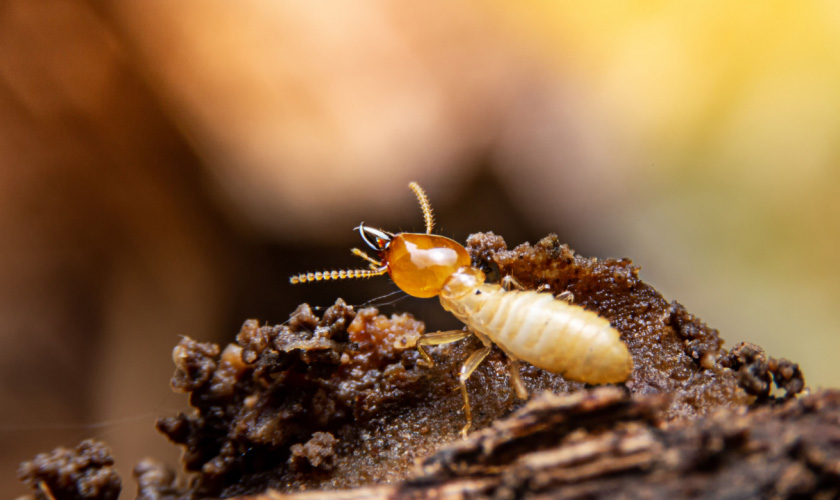
Termites are one of the most destructive pests a homeowner can face, and the damage they cause often goes unnoticed until it has become extensive. They feed on cellulose, the organic material found in wood, and they work from the inside out, hollowing structural components while the exterior surface may look completely normal. A termite colony can remain active in your home for years before the signs become visible.
At Trio Pest Control, we offer termite control in Alexandria that is focused on early detection, effective treatment, and long-term protection. Our technicians are trained to identify the signs of termite activity, determine the extent of the infestation, and apply treatments that target the colony at its source. Whether you are dealing with an active infestation or want to take preventive steps, we can help.
Subterranean termites, the most common species in Indiana, live in colonies underground and travel through the soil to reach wooden structures above. They build mud tubes along foundation walls, piers, and other surfaces to maintain the moisture they need to survive. These tubes act as protected highways between the colony and the food source, allowing termites to move back and forth without exposure to open air.
A mature termite colony can contain hundreds of thousands of individuals, and their feeding activity never stops. Worker termites operate around the clock, consuming wood from the inside and returning nutrients to the colony. Because they work silently and out of sight, homeowners rarely realize they have a problem until the structural damage is already significant.
Termite damage is not always easy to recognize, especially in the early stages. Wood that sounds hollow when tapped, buckling or bubbling paint on walls, sagging floors, and doors or windows that suddenly become difficult to open or close can all be indicators. Mud tubes running along the foundation, interior walls, or support beams are one of the more visible signs of subterranean termite activity.
Once inside, they gravitate toward areas with consistent warmth and moisture. Kitchens and bathrooms are the most common hot spots, but cockroaches can also establish themselves in laundry rooms, basements, utility closets, and anywhere plumbing runs through walls. Cluttered storage areas and spaces that are rarely cleaned or disturbed give them additional room to hide and breed without detection.
The cost of repairing termite damage increases the longer the colony is allowed to feed. Structural repairs involving floor joists, wall framing, support beams, and subfloor materials can run into thousands of dollars. Because termites work slowly and silently, many homeowners do not discover the damage until a renovation, a real estate inspection, or a visible failure reveals it.
Early treatment is the most effective way to minimize damage and protect the value of your home. Even if you have not seen obvious signs of termites, homes in areas where subterranean termites are active, which includes much of central Indiana, benefit from periodic inspections. Catching an infestation early can save significant time, money, and stress compared to dealing with advanced damage.
At Trio Pest Control, our termite treatment in Alexandria is designed to eliminate the active colony and create a barrier that helps prevent future infestations. We use proven treatment methods applied to the areas where termites are most likely to enter and feed, including around the foundation, along known pathways, and at critical structural contact points.
Our team takes the time to evaluate each property individually and recommend the approach that provides the strongest level of protection. Whether your home is currently dealing with an infestation or you want to be proactive about termite prevention, Trio Pest Control is here to help.
At Trio Pest Control, we focus on the environment around us here in the Alexandria area. We are professionals at controlling bugs, insects, carpenter ants, spiders, rodents, and other pests indigenous to Indiana, things like the following:

Trio’s year-round protection! 12 annual treatments year-round. Common Pests: ants, flies, small flies (Gnats), stink bugs, centipedes, millipedes, sow bugs, spiders, silverfish, food infesting insects, moths-indian, meal moth, grain beetle.
Learn More
Trio’s year-round protection! 4 annual treatments year-round. Common Pests: ants, flies, small flies (Gnats), stink bugs, centipedes, millipedes, sow bugs, spiders, silverfish, food infesting insects, moths-indian, meal moth, grain beetle.
Learn More
Trio’s year-round protection! 1 annual treatment year-round. Common Pests: ants, flies, small flies (Gnats), stink bugs, centipedes, millipedes, sow bugs, spiders, silverfish, food infesting insects, moths- indian, meal moth, grain beetle.
Learn MoreFor help choosing the right package, call today: 260-999-4114
Common signs include mud tubes along the foundation or interior walls, wood that sounds hollow when tapped, bubbling or peeling paint, sagging floors, and doors or windows that stick for no apparent reason. Discarded wings near windows or light sources in the spring are another indicator. Because termites work out of sight, a professional inspection is the most reliable way to confirm their presence.
Subterranean termites are by far the most common species in central Indiana. They live in underground colonies and travel through the soil to reach wood above ground. They require moisture to survive and build mud tubes to maintain a controlled environment as they move between the colony and their food source.
Termites cannot eat concrete, but they can travel through cracks and expansion joints in concrete slabs and foundations to reach the wood above. Even a very small gap is enough for termites to pass through, which is why they are able to infest homes built on slab foundations as well as those with basements or crawl spaces.
A well-established colony feeding for several years can cause extensive structural damage, including weakened floor joists, compromised wall framing, and deteriorated support beams. Nationally, termites are estimated to cause billions of dollars in property damage each year. The longer an infestation goes undetected, the more expensive the repairs tend to be.
In most cases, no. Standard homeowner insurance policies typically exclude termite damage because it is considered a maintenance issue rather than a sudden event. This makes proactive termite treatment and regular inspections especially important, since the cost of repairs falls entirely on the homeowner.
The longevity of termite treatment depends on the method used and the conditions around the home. Liquid barrier treatments can provide protection for several years when applied correctly. Your Trio Pest Control technician will explain the expected duration of the treatment and recommend a monitoring or follow-up schedule to maintain protection over time.
Yes. Termites can be active inside a home for years without producing obvious visible signs. Annual or periodic termite inspections are a smart investment, especially in areas like central Indiana where subterranean termites are widespread. An inspection can catch early activity before it leads to costly damage.