
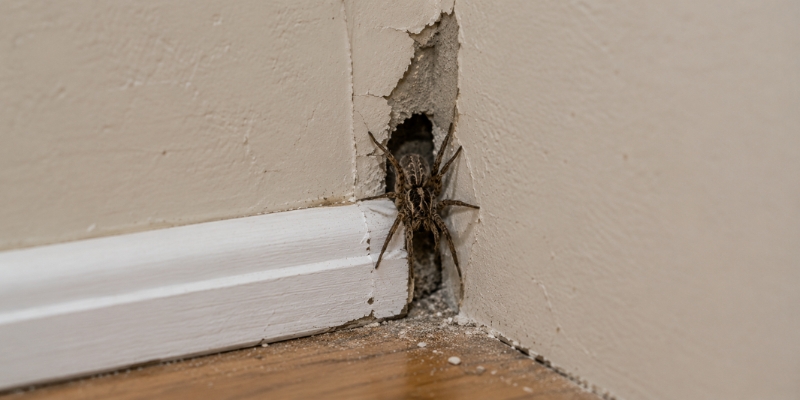
Professional spider control on a Fort Wayne home starts with identification and inspection, then combines web and egg-sac removal, targeted treatment, monitoring, prey reduction, and exclusion recommendations. The exact mix depends on the spider, the location, and whether activity is seasonal or established indoors. Trio Pest Control’s Fort Wayne spider-control service is designed to address visible activity and the conditions that allow spiders to stay.
Step 1: Identify the Spider and the Pattern
The first question is which spider is present. Large outdoor orb webs, loose cellar-spider webs, roaming wolf spiders, and suspected brown recluses indicate different behaviors. A technician uses specimens, web style, location, time of year, and monitoring evidence to narrow the identification.
The distribution of activity is as useful as the species name:
- One spider beside an often-open door may be an occasional invader.
- Webs returning around the same porch light suggest concentrated insect prey.
- Similar spiders caught across several basement rooms suggest broader indoor activity.
- Egg sacs, shed skins, and spiders of different ages can indicate reproduction.
- A suspected medically significant spider calls for careful confirmation.
Homeowners can help by saving clear photographs, preserving intact specimens without direct contact, and recording where sightings occur.
Step 2: Inspect Exterior and Interior Hot Spots
Outside, the inspection commonly follows the foundation, doors, windows, utility penetrations, siding and trim transitions, eaves, porch ceilings, exterior lights, vegetation, and stored materials. The technician looks for web concentrations, retreats, egg sacs, gaps, and insect activity.
Inside, attention shifts to basements, crawl spaces, garages, attics, closets, storage rooms, utility areas, and wall-floor edges. Moisture, clutter, cardboard, unsealed penetrations, and other insects provide context. Connected spaces are important; a bathroom spider may have traveled from a plumbing void, and garage activity may extend into an attic or shared wall.
An inspection also separates repairable gaps from intentional openings. Vents, weep holes, and drainage routes must continue to perform their building functions. Exclusion recommendations should be appropriate for the material and location.
Step 3: Remove Webs and Egg Sacs
Mechanical removal produces an immediate visible improvement and removes resources that treatment alone may leave behind. Vacuuming is useful indoors because it can collect spiders, silk, and egg sacs together. Exterior tools can reach webs along accessible eaves, windows, doors, and porch corners.
Removal also creates a clean baseline. Fresh webbing after service reveals where activity continues. That information helps assess whether lighting, prey, a hidden retreat, or an entry route still needs attention.
Safety limits the scope of do-it-yourself removal. High rooflines, electrical fixtures, unstable ladders, and confined spaces require appropriate training and equipment. A technician can determine which areas are safely accessible.
Step 4: Apply Targeted Control Where Appropriate
Treatment focuses on active sites, travel routes, and harborages identified during the inspection. The selected products and application methods depend on the species, surface, indoor or outdoor setting, and label directions. Broad, indiscriminate spraying is a poor substitute for locating the activity.
Web-building spiders around windows and lights may call for focused exterior attention. Hunting spiders in a basement may require monitoring and treatment along wall edges and entry routes. Suspected brown recluse activity can require a more extensive indoor strategy because the spiders use concealed retreats rather than obvious capture webs.
Residents should follow the technician’s preparation and post-service instructions. Those instructions reflect the product, application site, household conditions, and label requirements.
Step 5: Address the Insects Spiders Eat
Spiders remain where prey is available. Exterior lights attract flying insects. Moist basements support small pests. Trash residue attracts flies. Stored birdseed or pet food can support pantry pests. A spider program becomes stronger when those food sources are identified and reduced.
This does not mean prey reduction produces instant spider disappearance. Some spiders can survive long periods between meals. It does remove one of the main reasons the property supports recurring activity and complements direct control.
Practical changes include managing exterior lighting, repairing leaks, improving drainage, protecting stored food, cleaning spills, and addressing a separate insect infestation. The priorities depend on what the inspection finds.
Step 6: Reduce Shelter and Entry
Exclusion limits new arrivals. Door sweeps, weatherstripping, screens, window seals, and appropriate gaps around pipes or cables deserve attention. Trimming vegetation, moving firewood away from the house, and removing clutter reduce protected routes and harborages.
Inside storage changes make inspection and monitoring easier. Lidded plastic containers provide fewer folds than worn cardboard. Keeping items elevated and leaving access along walls exposes hidden corners. Regular vacuuming removes webs before they accumulate.
Home maintenance and pest service reinforce each other. Treatment can reduce current activity, while exclusion and habitat changes make the home less favorable afterward.
Step 7: Monitor and Reassess
Glue boards placed along travel edges can show which rooms remain active and capture specimens for identification. Each monitor should be dated, numbered, and positioned away from children and pets. New webs, trap catches, or sightings provide evidence for follow-up decisions.
Seasonal context guides reassessment. Late-summer outdoor webbing may decline as weather changes, while indoor activity in a heated building can persist. A plan may need adjustment if the identified species, source, or distribution differs from the initial evidence.
What a Complete Plan Accomplishes
The purpose of professional spider control is to reduce current spiders, remove visible evidence, locate the conditions supporting activity, and limit preventable recurrence. No property can be sealed against every outdoor spider, but concentrated webbing and repeated indoor sightings can be addressed systematically.
If you want the process applied to your property from inspection through prevention, contact Trio Pest Control to request a Fort Wayne spider-control evaluation.