
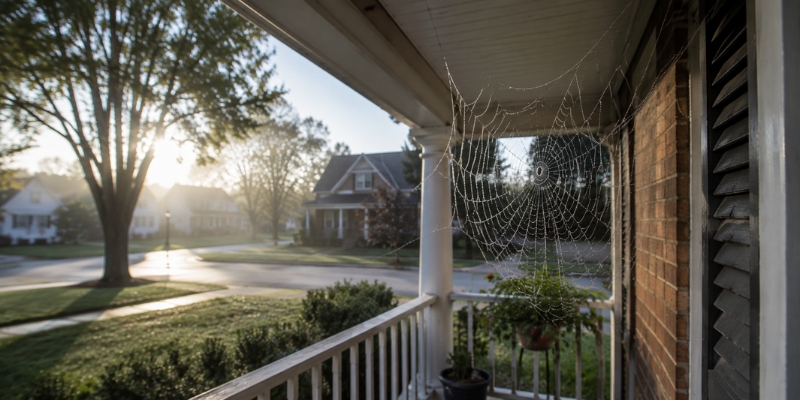
Fresh porch webs appear every morning because the area offers reliable insect traffic, protected anchor points, and favorable nighttime conditions. A spider can build or repair a web after dusk, feed while insects are active, and retreat before you step outside. Trio Pest Control provides Fort Wayne spider control for porches where daily web removal has failed to change the pattern.
Porch Lighting Creates a Nightly Food Source
Flying insects navigate by light and often circle exterior fixtures. Moths, midges, mosquitoes, beetles, and flies gather beside porch ceilings, columns, railings, and doors. Spiders place webs across the routes those insects use.
Several lighting details can increase the concentration:
- A bright bulb mounted directly beside the entry door
- Fixtures left on from dusk until morning
- Light spilling through uncovered windows next to the porch
- Several fixtures illuminating the same sheltered corner
- White walls or ceilings that reflect light across a wide area
You still need safe entry lighting. The goal is to direct it deliberately. Move a fixture away from the door when the layout permits, shield light so it covers the walking surface, or choose a bulb that attracts fewer insects. Curtains or blinds can reduce light spilling through a nearby window.
The Porch Protects Webs From Weather
Columns, balusters, furniture, ceiling corners, plants, and door frames give spiders firm attachment points. A roof keeps direct rain off the silk, while recessed corners reduce wind. The same architectural features that make a porch comfortable for people can make it productive for web-building spiders.
Late summer amplifies the effect. Spiders are larger, insect prey is abundant, and mature individuals are active. Dew forms on silk overnight and outlines every strand in the morning. The web may look brand new because it is new or because moisture has made an existing repair suddenly visible.
Nearby Landscaping Feeds the Pattern
Shrubs, vines, flowers, mulch, and groundcover support insects close to the porch. Plants touching steps, railings, or siding create bridges to the structure. Overwatered beds, clogged gutters, low spots, and leaking hose connections can increase moisture and insect activity.
Trim vegetation away from the porch and house while preserving the health of the plants. Remove leaf litter from corners and beneath furniture. Correct standing water and drainage issues. Store firewood and unused planters away from the entry. These changes widen the gap between outdoor habitat and the place where your household walks.
Trash and recycling can contribute as well. Keep containers closed, clean spills, and position them away from the porch when practical. Flies drawn to residue become prey for spiders along the route.
Why Sweeping Works for Only a Day
A broom breaks the visible web but may leave the spider in a ceiling crack, behind a shutter, beneath furniture, or under trim. It may also leave an egg sac attached in a protected corner. As long as insects keep arriving, the location remains valuable.
Use a vacuum or a dedicated long-handled web tool on accessible surfaces. Collect egg sacs and clean the tool afterward. Repeat removal discourages occupation and improves visibility for inspection. Pair it with lighting, landscaping, moisture, and exclusion changes for a stronger result.
Avoid spraying a porch indiscriminately with household products. The species, surface, weather exposure, and label directions all affect appropriate use. A targeted plan is easier to evaluate and less likely to overlook the source.
Check the Transition From Porch to House
Recurring exterior webs confirm activity on the porch, while interior sightings reveal whether the pattern extends into the house. Inspect door sweeps, weatherstripping, screen doors, window screens, and gaps around trim or utility lines. Watch for light visible around a closed door from inside at night.
Pay attention to insects inside the entryway. Small flies near a window or beetles around a light can support indoor webbing. Vacuum corners and inspect behind furniture. If spiders appear in adjacent rooms, the plan should include both sides of the wall.
How Professional Control Approaches a Porch
A technician can identify the main web builders, remove accessible webs and egg sacs, inspect retreats, and look for the insects attracting them. The assessment includes exterior lighting, landscaping, roof and trim transitions, doors, windows, and foundation edges. Treatment can then be directed to active areas according to the species and site conditions.
That process also sets a realistic goal. A porch exists within an outdoor environment, so occasional spiders can arrive again. Effective control reduces heavy webbing, limits favorable sites around high-use areas, and closes preventable routes into the home.
If your porch looks webbed over again every morning, ask Trio Pest Control to evaluate the attraction points and build a plan for your Fort Wayne home.